

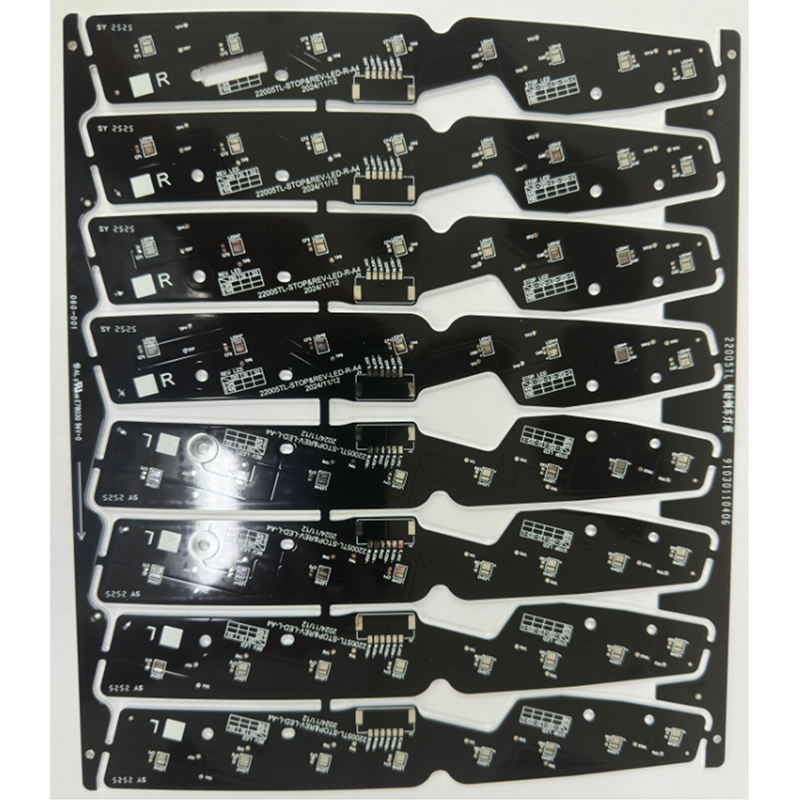
Single-Sided Aluminum-Based Tin-Sprayed Substrate
Product Overview
This product is a single-sided aluminum-based substrate with tin-sprayed surface treatment, designed for applications requiring reliable solderability,
excellent thermal performance, and stable mechanical strength.The tin-sprayed coating provides a uniform, oxidation-resistant surface suitable
for electronic assembly and industrial processing.
Key Features
Aluminum-based structure: Lightweight with excellent thermal conductivity
Single-sided tin spraying: Improves solderability and surface protection
Good electrical performance: Stable conductivity for electronic applications
Anti-oxidation surface layer: Protects aluminum from corrosion and environmental exposure
Strong coating adhesion: Durable tin layer with reduced risk of peeling
Cost-effective solution: Ideal for mass production and industrial use
Technical Specifications
Base material: Aluminum alloy (various grades available)
Surface treatment: Single-sided tin spraying (Sn coating)
Coating thickness: 5–30 μm (customizable)
Surface finish: Matte / semi-bright tin surface
Thermal conductivity: High (depends on aluminum alloy grade)
Operating temperature range: -40°C to 120°C (typical)
Dimensional tolerance: ±0.01–0.05 mm (depending on process)
Applications
PCB heat dissipation substrates
LED lighting heat sinks
Power modules and electronic housings
Automotive electronics components
Industrial control systems
communication equipment
Advantages
Compared with untreated aluminum substrates, this tin-sprayed version provides:
Better solderability for electronic assembly
Enhanced surface stability and corrosion resistance
Improved compatibility with PCB manufacturing processes
More reliable long-term electrical contact performance
Customization Options
Aluminum alloy grade selection
Substrate thickness and size
Tin coating thickness adjustment
One-side or partial-area spraying
Surface roughness and finishing requirements
Quality Control
Each batch is strictly inspected for:
Coating uniformity and adhesion strength
Surface roughness consistency
Thickness measurement accuracy
Solderability testing performance