

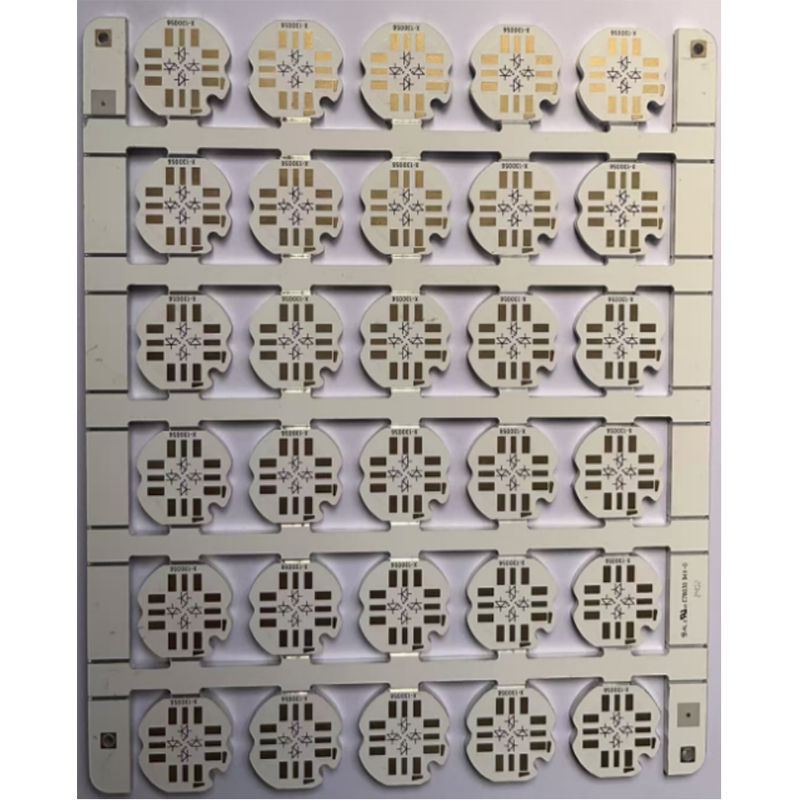
Aluminum Substrate with Gold Plating (Premium Metal Base Material)
Product Overview
This productdesigned for applications requiring excellent thermal conductivity, corrosion resistance, and superior surface conductivity.
The gold-plated finish enhances electrical performance while providing an elegandurable protective layer suitable for advanced industrial and electronic uses.
Key Features
High-quality aluminum base: Lightweight, strong and excellent heat dissipation
Gold plating surface: Enhances conductivity and oxidation resistance
Excellent thermal management: Ideal for heat-sensitive electronic components
Superior corrosion resistance: Suitable for harsh or high-humidity environments
Smooth, uniform coating: Precision plating ensures consistent performance
Strong adhesion layer: Prevents peeling and ensures long-term durability
Technical Specifications
Base material: Aluminum alloy (custom grades available upon request)
Surface treatment: Nickel underlayer + gold plating (optional structure)
Gold thickness: 0.05–2.0 μm (customizable)
Surface finish: Mirror / matte / brushed options
Tolerance: High-precision machining available (±0.01 mm typical)
Thermal conductivity: High (dependent on alloy grade)
Operating temperature: -40°C to 150°C (typical range)
Applications
Power electronics heat sinks
LED lighting modules
RF and microwave components
Semiconductor packaging
Automotive electronic systems
Aerospace and precision instruments
High-end decorative and conductive panels
Advantages
Compared with standard aluminum or uncoated substrates, gold-plated aluminum offers:
Better signal stability in high-frequency applications
Improved oxidation resistance over long-term use
Enhanced solderability and bonding performance
Premium appearance for visible components
Customization Options
Substrate size and thickness
Alloy grade selection
Gold layer thickness control
Surface texture (matte / polished / patterned)
Additional coatings (nickel, silver, palladium, etc.)
Quality Assurance
All products undergo strict inspection, including:
Surface uniformity testing
Adhesion strength testing
Thickness measurement (XRF analysis)
Electrical conductivity verification